Treated Timber & Bamboo Piles for Flood-Resilient Housing

Treated Timber & Bamboo Piles for Flood-Resilient Housing

Ancient wisdom meets modern engineering for safer homes in rising waters.


Introduction: An Old Material With a New Purpose

When rising water threatens a home, the strength of its foundation becomes the difference between survival and collapse. Concrete may be strong, steel may be precise, but in some of the most flood-prone communities around the world, the answer to resilience has been quietly present for centuries. Treated timber and engineered bamboo piles, once dismissed as “traditional,” are now returning as powerful tools in modern flood-resistant construction. With the right engineering, these natural materials can outperform more expensive systems and create foundations that stand firm when water levels rise.


Why Foundations Fail in Flood Zones

Floodwater does not damage a foundation only by force. It erodes soil around the base, removes support below the pile tip, softens clay layers, increases buoyant uplift, and introduces lateral currents that push foundations sideways. When a concrete pile loses embedment due to scour, its vertical capacity drops sharply. When soil becomes saturated, conventional shallow footings settle unevenly and crack the superstructure above. In repeated flood cycles, even well-reinforced structures can lose stability.

Engineers have learned that resilience in flood zones is not always about raw strength. It is about adaptability, soil compatibility, and the ability of the foundation to maintain integrity even when the surrounding ground weakens. This is exactly why treated timber and bamboo piles have survived in river towns, deltas, and coastal settlements for generations.


What Are Treated Timber and Bamboo Piles?

Treated timber piles are long, straight wooden logs strengthened through processes that protect them from decay, insects, and moisture. When submerged below the groundwater line, timber becomes highly durable because the absence of oxygen prevents rot. This is why centuries-old timber foundations in Amsterdam still support buildings today.

Engineered bamboo piles work on a similar philosophy. Bamboo is naturally strong in tension and surprisingly resilient under cyclic loads. Modern techniques compress bamboo fibres or combine them with waterproof resins and coatings, transforming them into lightweight but durable foundation elements. When used in clusters rather than single piles, bamboo foundations distribute loads efficiently and respond flexibly to soil movement.

These are not weak substitutes. They are engineered natural materials designed to behave predictably under flood stress.


Why Timber and Bamboo Perform Well in Flood-Resilient Housing

One of the most compelling qualities of both materials is their flexibility. Unlike rigid concrete piles, timber and bamboo bend slightly under lateral water forces rather than cracking. This flexibility allows them to absorb and dissipate energy from waves or fast-moving floodwater. In soft alluvial soils, where excessive rigidity leads to brittle failure, flexible piles perform exceptionally well.

Another advantage is their compatibility with the soil. Timber piles drive smoothly without fracturing, even in mixed sediments. Bamboo piles can be installed in groups, increasing redundancy and stability. When floods recede, these materials adapt to soil rebound without introducing large internal stresses. More importantly, they are far more affordable and quicker to install in regions where budgets are tight and rapid construction is essential.

In many Southeast Asian villages built along rivers, bamboo pile systems have kept homes stable for decades despite annual monsoon floods. Their performance is not accidental; it is a combination of material behaviour and clever engineering.


Treatment and Design Considerations

For timber piles to remain durable, engineers ensure they remain below the permanent water table where oxygen cannot reach. Additional treatment with preservatives or pressure-impregnated chemicals protects portions above water. Bamboo requires resin coatings, thermal treatment, or lamination to resist decay. Both materials must be cut, handled, and stored carefully to prevent early deterioration.

Designing these foundations requires attention to pile spacing, embedment depth, soil-bearing conditions, and expected flood loads. In sandy soils with high scour potential, deeper embedment and cluster installation improve stability. In clay soils, using larger-diameter timber or grouped bamboo piles distributes load better. A well-designed timber or bamboo foundation is not a temporary fix; it is a long-term strategy that gains strength when paired with elevated superstructures.

A notable example comes from the Netherlands, where timber piles driven centuries ago still hold historic waterside houses. Similarly, communities in Vietnam and Indonesia rely on engineered bamboo foundations for stilted homes, allowing structures to survive seasonal floods with minimal maintenance. These real cases show that when designed correctly, natural pile systems are far more durable than their reputation suggests.


Challenges and How Engineers Overcome Them

Despite their advantages, timber and bamboo face skepticism. Many assume these natural materials decay rapidly, but this concern usually comes from improper installation or inadequate treatment. Modern preservation techniques have extended their lifespan dramatically, often matching that of reinforced concrete in wet conditions.

Regulatory codes are another challenge, as many regions lack updated guidelines for alternative pile systems. Engineers address this by relying on performance-based design, advanced testing, and hybrid systems that combine timber or bamboo with concrete caps or steel connectors. Maintenance is also straightforward, as inspections can identify early signs of wear long before structural performance is affected.

With the right engineering, these challenges become manageable rather than limiting.


How Engineers Integrate These Foundations Into Flood-Resistant Housing

The process begins with a detailed geotechnical survey to understand soil behavior during saturation and flooding. Engineers then choose between timber and bamboo based on soil stiffness, waterlogging patterns, expected lateral loads, and availability of materials. Once installation begins, quality control becomes crucial. Pile driving must be precise, treatments must remain intact, and clusters must be aligned properly.

After construction, the foundation’s performance is monitored through settlement checks and periodic inspections. When paired with elevated floor systems, lightweight walls, and proper drainage design, timber and bamboo piles become part of an integrated flood-resilient housing strategy that is both affordable and effective.


Conclusion

Flood-resilient housing demands foundations that can work with water rather than fight against it. Treated timber and engineered bamboo piles offer unique advantages that modern materials sometimes struggle to match, especially in soft, waterlogged soils. Their flexibility, durability, affordability, and long history of success make them strong candidates for communities facing increasingly frequent floods. As climate change intensifies these events, rediscovering and modernizing these natural foundation systems is not just a technical choice. It is a practical, sustainable, and culturally grounded solution for safer homes.

Reinforced Concrete for Flood-Resilient Housing: Structure and Foundation

Reinforced Concrete for Flood-Resilient Housing: Structure and Foundation

Why the strongest material in construction becomes even more essential when the waters rise.


Introduction: When Water Becomes the Real Test of a Building

Floods do not knock politely before entering a home. They come with force, speed, unpredictability, and an ability to destroy everything built without careful engineering. When floodwaters rise, they test a building’s weight, stability, foundations, joints, anchorage, and resistance to scour. Many materials that perform well in normal environments fail instantly during flood exposure. But reinforced concrete, when used strategically, can transform an ordinary structure into a flood-resilient system capable of withstanding water pressure, soil movement, and erosion.

Designing for floods is not only about elevating homes or diverting water. It is about creating foundations and structural systems that remain stable even when soil weakens, water forces increase, and hydrostatic pressure pushes from every direction. This is where reinforced concrete becomes one of the most effective tools civil engineers have today.


1. Why Reinforced Concrete Performs Well in Flood Conditions

Reinforced concrete combines compressive strength from concrete and tensile strength from steel reinforcement. Floods create forces such as uplift, lateral water pressure, buoyancy, and scour. These forces require a material that does not soften, weaken, or deform when wet. Reinforced concrete maintains structural integrity even under prolonged water exposure if designed with proper cover, mix proportions, and reinforcement detailing.

Beyond strength, concrete also resists impact from floating debris, a common cause of wall failures during flash floods. Its mass gives it stability, reducing buoyancy forces that might otherwise lift lighter structures off their foundations. This combination of mass, stiffness, and reinforcement creates a level of reliability that other materials struggle to match.


2. Foundations for Flood-Resilient Structures: What Engineers Consider First

Flood-resilient housing begins with the foundation. Soil near rivers, deltas, or coastal zones weakens when saturated. Engineers therefore design foundations that bypass weak layers and remain stable under changing moisture conditions. Deep foundations, such as reinforced concrete piles, are especially effective because they transfer building loads to stronger soil strata below.

Another approach is designing reinforced concrete grade beams and pile caps that tie the entire foundation together, distributing uplift and lateral forces. During floods, water can erode soil around foundation edges, a process called scour. Reinforced concrete foundations resist scour more effectively because they maintain shape and strength even when partially exposed.

The goal is not only to support the home in dry conditions but to ensure the foundation remains reliable when water causes rapid soil loss.


3. Elevated RC Platforms: A Critical Component of Flood Design

One of the most successful design strategies for flood-prone regions involves building homes on elevated reinforced concrete platforms. These platforms raise living spaces above expected flood levels while providing a rigid structural base resistant to water and debris impact.

The elevation height depends on hydrological data, historical flood maps, and climate projections. Engineers often design these platforms as monolithic slabs supported by reinforced concrete columns or piles. This monolithic approach reduces weak joints and makes the structure behave as a solid unit during flooding.

Elevation not only protects against direct water entry but also reduces the risk of prolonged moisture exposure, which can damage interior finishes and utilities.


4. Reinforcement Detailing: Where Strength Truly Comes From

Concrete alone cannot handle the tension and cracking forces generated during floods. Proper reinforcement detailing determines whether a structure survives. Engineers provide extra reinforcement in foundations, beams, and columns in flood zones, especially in regions where lateral water forces are high.

Critical reinforcement practices for flood-resilient structures include adequate concrete cover to protect steel from corrosion, closed stirrups for confinement, continuous bars for shear resistance, and anchorage that prevents uplift failure. These details ensure that the structure behaves predictably even when water forces are unexpected.

Good detailing often makes the difference between a building that withstands water and one that collapses despite using reinforced concrete.


5. Scour and Erosion Protection: The Often-Ignored Failure Mechanism

Many buildings collapse because soil supporting their foundations is washed away during floods. This phenomenon, known as scour, removes soil from around footings and piles, leaving concrete members unsupported. Even a strong structure can fail if the ground beneath it disappears.

Engineers mitigate scour by designing reinforced concrete grade beams, deeper footings, protective riprap layers, and geotextile linings. These measures prevent rapid soil loss during high-velocity water flow. In severe flood regions, entire foundations may be encased in reinforced concrete jackets to stop erosion from undermining the structure.

Scour protection is especially important for riverside and coastal housing.


6. Case Studies: When Reinforced Concrete Made the Difference

Case Study 1: Kerala Floods, India (2018)

During the devastating Kerala floods, many traditional masonry homes collapsed because they lacked anchorage and had shallow foundations. However, reinforced concrete homes built on pile foundations survived even when surrounding soil eroded. Engineers found that RC piles carried loads effectively even after significant scour, demonstrating the importance of deep foundations.

Case Study 2: Hurricane Katrina, USA (2005)

In Louisiana, elevated reinforced concrete homes performed significantly better than non-elevated timber homes. The mass and stiffness of reinforced concrete resisted storm surge and floating debris impact. Reports from FEMA concluded that RC structures had the lowest failure rate among all building types exposed to the surge.

Case Study 3: Bangladesh Raised Plinth Homes

In Bangladesh, millions of homes were rebuilt on reinforced concrete plinths that elevate structures above seasonal floodwaters. These plinths dramatically reduced collapse rates and allowed communities to remain in place even during severe monsoon seasons.

These cases show that reinforced concrete, when properly detailed and combined with flood-resilient design, can prevent catastrophic failure.


7. Designing RC Homes for Future Climate Conditions

Climate change is intensifying rainfall patterns and increasing flood frequency. Engineers must now design reinforced concrete homes based on projected future flood levels, not historical averages. This means higher plinths, stronger foundations, improved drainage, and heavier lateral load design.

More advanced solutions involve integrating RC structures with amphibious systems, floating foundations, or hybrid elevated-amphibious platforms. The flexibility of reinforced concrete allows these systems to adapt to rising water levels while offering decades of durability.

Flood-resilient housing is no longer optional. It is a necessary step in adapting to our changing world.

Floodproofing: Designing Buildings to Withstand the Water

Floodproofing: Designing Buildings to Withstand the Water

The Most Dangerous Force in Construction Isn’t Fire or Wind. It’s Water.

Most people imagine fires, earthquakes, or storms when they think about disasters. But the truth is that water causes more property damage globally than any other natural force. It does not roar like a cyclone or shake the ground like an earthquake. It rises quietly, steadily, and relentlessly, turning homes unlivable and foundations unsafe. For civil engineers, floodproofing has become one of the most essential responsibilities of modern design, especially as climate change triggers more intense rainstorms, rising seas, and unpredictable weather patterns.

Floodproofing is not a single solution. It is an entire engineering philosophy that understands how water behaves, how soil reacts, how loads shift, and how materials deteriorate. Designing flood-resistant buildings involves smart planning, site evaluation, structural innovation, and real lessons learned from failures around the world.

This blog will break down how buildings can be designed to withstand flooding, what techniques engineers use, and what real case studies teach us about prevention.


1. Understanding Flood Behavior: The First Step in Floodproof Design

Floodproofing begins with understanding how water moves. Civil engineers must evaluate whether water at the site will rise vertically, flow horizontally at high speed, seep underground, or accumulate slowly over time.

A building facing river overflow deals with different forces compared to one in a coastal storm surge. Engineers study topography, drainage paths, rainfall intensity, tidal data, soil type, and historical flood records. In many cases, the ground itself becomes a hazard because saturated soil loses strength. Floodproof design therefore begins with geotechnical studies that determine how much pressure the soil can take and how deep foundations must extend to stay stable during saturation.

Once the behavior is understood, engineers select strategies that prevent failure rather than simply resisting water.


2. Elevation: The Most Effective Strategy in Flood-Prone Regions

Elevation is one of the oldest and most effective floodproofing techniques. By raising a home above predicted flood levels, engineers ensure the structure remains dry even when surrounding land is underwater. This method is widely used in coastal towns, river basins, and low-lying rural regions.

Elevated buildings may use reinforced concrete stilts, masonry piers, or engineered timber piles. The height depends on flood zone maps, local codes, and environmental changes. Modern elevation techniques also consider hydrodynamic forces, meaning water should pass below the home without striking the supports too hard.

Elevation not only protects against water but also reduces long-term maintenance and mold risks. When combined with lightweight materials like fibre-cement boards and treated timber, elevated homes become both affordable and resilient.


3. Dry Floodproofing: Keeping Water Out Through Barriers and Reinforcement

Dry floodproofing is a method where engineers prevent floodwater from entering the building using barriers, sealants, reinforced walls, watertight doors, and pumps. This strategy is suitable for commercial buildings or residential areas where minor to moderate flooding occurs.

The key challenge with dry floodproofing is ensuring that the building can withstand water pressure. If walls are not sufficiently reinforced, they can bow inward or collapse. Civil engineers use hydrostatic pressure calculations to design walls that resist these loads. They also ensure that window frames, wall joints, and utility penetrations are fully sealed.

Modern materials like epoxy-coated barrier systems, rubber gaskets, concrete admixtures, and flood-resistant insulation make dry floodproofing more effective than ever.


4. Wet Floodproofing: Allowing Water In Without Causing Damage

Wet floodproofing sounds counterintuitive but is highly effective for minimizing damage. Instead of fighting water entry, the building is designed so that water can enter and exit without damaging critical components. This method works well for basements, garages, crawl spaces, and lower levels of buildings in frequent flood zones.

Engineers elevate electrical systems, use flood-resistant materials, design easy drainage paths, and protect essential utilities. By equalizing internal and external water pressure, the structure stays stable and avoids collapse.

Wet floodproofing is often used in combination with elevation or shoreline protection.


5. Foundation Design: Building a Base That Survives Saturation

Flooding affects soil strength. When soil becomes saturated, it loses friction and can no longer support loads effectively. Engineers overcome this by designing deep foundations such as pile foundations, drilled shafts, or reinforced concrete piers.

For clay-rich soils, engineers must consider swelling and shrinkage caused by water fluctuations. Sandy soils may erode quickly, so scour protection becomes necessary. Proper drainage layers, geotextiles, and gravel beds help stabilize foundations in flood-prone areas.

In coastal regions, corrosion-resistant reinforcement and concrete mixes with low permeability protect foundations from saltwater damage.


6. Site Planning: The Hidden Layer of Floodproofing

Flood-resistant design extends far beyond the building itself. Ideal site planning considers natural water flow, vegetation patterns, swales, retention ponds, permeable pavements, and landscape grading. A well-planned site helps redirect water away from structures and improves safety.

Engineers use contour maps, stormwater models, and hydrological simulations to design layouts that handle heavy rainfall. In many cases, a building survives because the site was planned intelligently.


7. Materials That Resist Water Damage

Floodproof structures require materials that do not rot, warp, swell, or corrode. Common materials include reinforced concrete, pressure-treated timber, galvanized steel, water-resistant gypsum, PVC boards, and closed-cell insulation.

Engineers avoid materials like untreated wood, fiberboard, carpets, and low-quality plaster because they deteriorate rapidly when exposed to water.

Material selection plays a major role in long-term performance and maintenance costs.


8. Case Studies: Real Lessons from Floodproofing Failures and Successes

Case Study 1: New Orleans, USA – Hurricane Katrina (2005)

When the levees in New Orleans failed, more than 80 percent of the city flooded. Many homes were not elevated and sat directly at or below sea level. Structural damage was caused not only by water but by the pressure created when water filled basements.
What would have prevented it?
Higher elevation standards, stronger levee protection systems, and wet floodproofing for basements. Katrina transformed U.S. flood design codes forever.

Case Study 2: Kerala, India – 2018 Floods

Kerala experienced one of the worst floods in nearly a century. Many homes built along rivers lacked elevation and had shallow foundations unsuitable for saturated soils.
What would have prevented it?
Better site selection, elevation strategies, and foundations designed for lateral water loads.

Case Study 3: The Netherlands – Delta Works Success

The Netherlands is known for the greatest flood defense system in the world. Homes are elevated, riverbanks are fortified, and inland water management is highly advanced.
Why does it work?
A combination of elevation, controlled water flow, strong foundations, and national-level engineering planning.


9. Challenges in Floodproofing: What Engineers Must Overcome

Floodproofing is complex because climate change has made historical data unreliable. Rainfall patterns shift, sea levels rise unpredictably, and extreme storms appear more frequent. Engineers must design not only for present risk but for future hazards.

Cost is another challenge. Elevated systems can be expensive for low-income communities. Maintenance is essential, yet many homeowners neglect drainage systems, sump pumps, and barriers.

Despite these challenges, modern engineering offers practical solutions that dramatically reduce damage.


Conclusion: Floodproofing Is Not an Option. It Is a Necessity.

Water may never roar like a hurricane or shake the earth like an earthquake, but it destroys quietly, steadily, and completely if a building is not prepared. Floodproofing is the shield that turns a vulnerable structure into a resilient one. It combines smart design, structural engineering, material science, and lessons learned from real disasters.

In a world where floods are increasing, civil engineers stand at the frontline, ensuring that homes remain safe and communities stay protected. With the right design choices, floodproof buildings can become the standard, not the exception.


References

FEMA. Floodproofing Building Design Requirements. https://www.fema.gov
US Army Corps of Engineers. Flood Mitigation Measures. https://www.usace.army.mil
UNISDR. Global Assessment on Flood Risk. https://www.unisdr.org
Kerala Floods Government Report (2018). https://sdma.kerala.gov.in
Netherlands Delta Works. Government Portal. https://www.government.nl

Amphibious Housing: Designing Homes That Rise With Water

Amphibious Housing: Designing Homes That Rise With Water

How engineering innovation is creating homes that adapt instead of sinking.


Introduction: When the Water Rises, Most Homes Lose. These Homes Don’t.

For generations, people living near rivers, deltas, coasts, and floodplains have accepted one terrifying truth. When floodwaters rise, their homes stand no chance. The structure stays fixed while the water moves freely, destroying everything it touches. But what if a house did not resist water at all? What if it adapted to it? What if the building rose with the flood instead of fighting against it?

This question forms the foundation of amphibious housing, a new category of flood-resilient design where homes float when necessary and rest on land when not. It is an elegant idea with surprisingly deep technical roots, blending buoyancy physics, hydrological studies, materials engineering, geotechnical design, and community-scale planning. As climate change pushes coastal populations into more extreme conditions, amphibious housing asks a simple but revolutionary question: instead of building higher and higher, why not build smarter?


1. What Exactly Is Amphibious Housing?

Amphibious housing is an architectural and engineering strategy where a building remains on the ground under normal conditions but automatically rises during flooding. It is not a full-time floating structure like a houseboat. Instead, it functions as a hybrid. When water levels rise, hidden buoyant systems activate, lifting the home above floodwaters. When water recedes, the house gently returns to its original position.

This adaptive behavior makes amphibious systems fundamentally different from static elevated housing. Elevation requires predicting a single safe height, which is increasingly difficult in regions where floods are unpredictable or intensifying. Amphibious construction avoids the limitations of fixed elevation by allowing the structure to follow the water rather than resist it.

The idea is simple. The engineering behind it is beautifully complex.


2. How Amphibious Structures Work: The Engineering Logic

At the core of amphibious housing is a buoyancy system. The house rests on vertical guides or piles that keep it stable while allowing vertical movement. Under the structure, buoyant chambers, sealed pontoons, or lightweight materials generate lift when water rises. The more the water rises, the more lift these elements provide, keeping the house above the flood level.

Engineers calculate buoyancy carefully. The total lift must exceed the combined dead load and live load of the structure while maintaining stability against lateral forces produced by wind, water currents, and debris impact. To avoid tilting, the buoyant system must be symmetrically aligned and its center of gravity strategically positioned. Geotechnical engineers also study soil behavior since the guiding piles must resist lateral movement even when saturated.

Amphibious foundations rely on passive systems. There are no motors, pumps, or electronics involved. The water itself triggers the response. This makes the design inherently resilient and suitable for low-income flood-prone regions where maintenance budgets may be limited.


3. Advantages of Amphibious Housing in a Changing Climate

The biggest advantage of amphibious housing is adaptability. Unlike fixed elevation, which is designed for a specific predicted height, amphibious systems work across a range of flood levels. This makes them highly suitable for regions experiencing more frequent flash floods or longer flood durations.

Amphibious houses also preserve a natural connection to the ground. Traditional elevated structures may require tall stilts that disrupt access, aesthetics, or community cohesion. Amphibious homes feel like regular houses for most of the year. They only transform when needed.

From a financial perspective, amphibious retrofits can be more affordable than large-scale elevation projects. Communities with tight budgets can convert traditional homes using buoyant foundations and guiding systems without rebuilding from scratch. For governments, amphibious planning can become a cost-efficient adaptation strategy for vulnerable regions rather than relocating entire neighborhoods.


4. Real Examples From Around the World

Amphibious houses are no longer theoretical. Some of the most interesting real-world applications include:

The Netherlands: Maasbommel Amphibious Houses

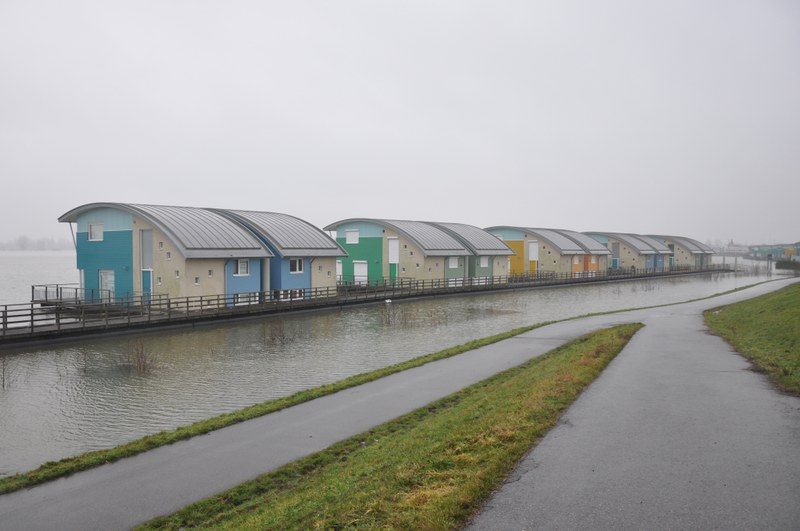
The world’s first modern amphibious neighborhood was built in Maasbommel. These homes rest on concrete pontoons that float upward during floods while steel piles guide vertical movement. They have successfully lifted during multiple high-water events, proving the reliability of the system.

United States: Buoyant Foundation Project, New Orleans

After Hurricane Katrina, the Buoyant Foundation Project developed amphibious retrofits for raised wooden homes. Lightweight flotation blocks and vertical guides allowed historic homes to float without altering their architecture. This showed that amphibious systems are not limited to new construction.

Bangladesh: Low-Cost Amphibious Schools

In flood-stricken rural Bangladesh, amphibious schools using bamboo frames and steel barrels have operated for years. These structures rise during monsoon floods, ensuring that education continues even during extreme weather.

These examples highlight how amphibious housing can work in advanced nations and low-resource communities alike.


5. Challenges and the Path Forward

Despite its promise, amphibious housing faces challenges. Building codes in many countries do not yet include provisions for floating foundations, making approvals difficult. Engineers must also address long-term material durability, especially in regions with corrosive water or strong currents. Community acceptance can also be a hurdle since many people initially hesitate to trust a home designed to float.

However, the increasing frequency of extreme floods is shifting perspectives. As climate change continues to reshape coastlines, cities, and river systems, amphibious strategies may soon move from experimental to essential. Collaboration between civil engineers, hydrologists, architects, and policymakers will determine how quickly this technology becomes mainstream.


Conclusion: A Future Where Homes Don’t Just Survive Floods — They Adapt to Them

Amphibious housing represents a shift in mindset. Instead of building higher, communities are learning to build smarter. Instead of resisting water, they are learning to live with it. And instead of accepting catastrophic flood damage as inevitable, engineers are designing systems that transform danger into movement and movement into safety.

As rising seas and unpredictable storms challenge traditional construction, amphibious homes offer a powerful alternative. They show that resilience is not about standing still but about learning to move.

Elevated Systems: Typologies of Flood-Resilient Housing

Elevated Systems: Typologies of Flood-Resilient Housing

Floods don’t destroy homes. Weak designs do. And in a world where sea levels rise and storms intensify every year, elevated housing is no longer an option — it is survival engineering.


Introduction: Why Elevated Housing Matters Now More Than Ever

Floods are becoming more frequent, more destructive, and more unpredictable than at any point in modern history. Millions of families across coastal regions, river basins, and low-lying valleys are witnessing how traditional homes fail under the pressure of rising water. What used to be “once in a century” floods are now occurring every decade.

Civil engineers have responded with one clear solution: elevation. Lifting structures above flood levels reduces damage, protects communities, and saves lives. But elevation is not a single method. It is an entire science involving soil behavior, hydrodynamics, foundation design, material selection, and community planning.

This blog explores the major typologies of elevated housing, explains how they work, and outlines why they are essential for building a flood-resilient future.


1. Stilt / Pile-Supported Housing: The Classic Elevated System

Stilt housing is one of humanity’s oldest flood-resilient systems, used for centuries in regions like Kerala, Vietnam, Bangladesh, and coastal Louisiana. The idea is simple: raise the house on long vertical columns so water can flow under rather than through it.

How They Work

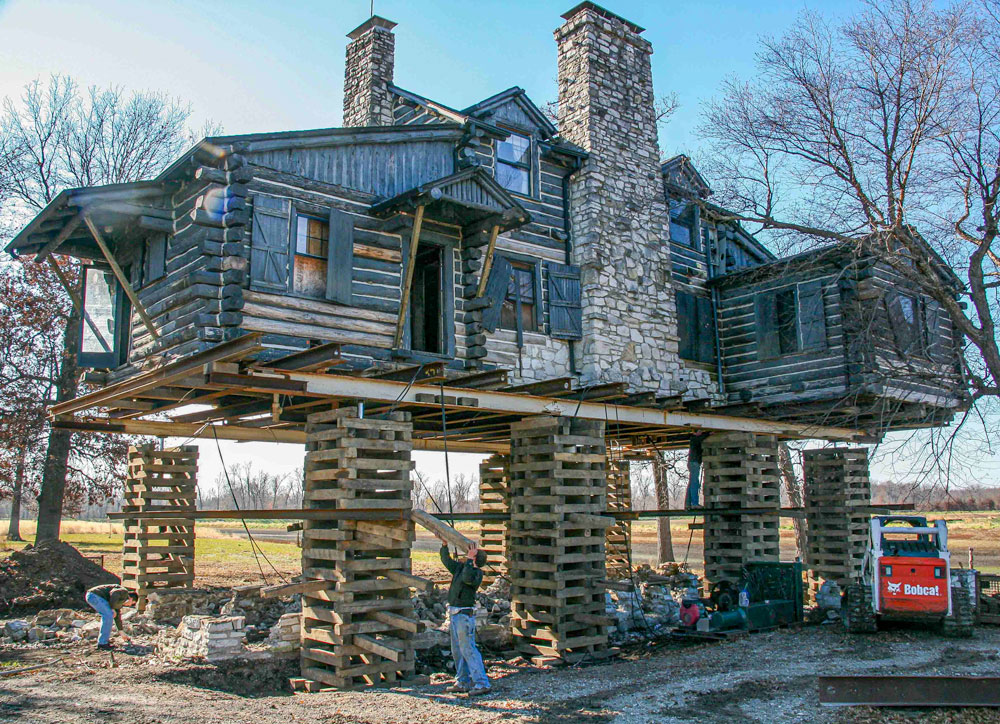
Engineers drive piles deep into stable soil layers, allowing the structure to remain firm even as floodwaters pass beneath. These piles resist lateral forces from waves and debris while keeping the house level during floods.

Where It Works Best

Stilt housing is ideal for:
• riverbanks
• deltas and estuaries
• coastal regions
• areas with moderate wave energy

Why It Matters

Raising homes even 1–2 meters drastically reduces loss of property, and raising them 3–5 meters can prevent catastrophic structural failure. Communities in the Sundarbans and the Mekong Delta rely on elevated stilt systems daily, proving their resilience in real-world conditions.


2. Raised Earth and Earthen Plinth Systems: Low-Tech, High-Impact Elevation

Before concrete and steel, people elevated homes using earth, creating raised platforms above flood levels. This remains one of the most accessible and cost-effective solutions for rural communities.

How They Work

Engineers compact layers of soil, sand, gravel, or stabilized earth to create a plinth that lifts the home above expected flood lines. The platform is shaped to divert water away and resist erosion.

Where It Works Best

• rural villages
• agricultural communities
• regions with predictable flood patterns

Why It Matters

Raised earth systems are incredibly affordable and easy to build using local materials. The Char communities of Bangladesh and many flood-prone Indian villages still rely on this method — often combined with modern reinforcement for better durability.


3. Floating / Amphibious Housing: Homes That Rise With the Water

When water levels become unpredictable, engineers design homes that move. Amphibious housing rests on the ground during normal weather but floats safely when floods arrive.

How They Work

These systems use buoyant foundations — such as sealed drums, EPS blocks, or air-filled pontoons — connected to vertical guide posts. As water rises, the house lifts while staying aligned, and when water recedes, it returns to its original position.

Where It Works Best

• areas with fluctuating water levels
• backwater regions
• wetlands

Why It Matters

Amphibious housing reduces long-term maintenance costs and eliminates the fear of unpredictable floods. Projects in the Netherlands, Thailand, and the United States have already proven their safety and practicality.


4. Hybrid Elevated Systems: Combining Modern Engineering With Local Needs

In many communities, neither stilts nor floating homes alone solve the full problem. Hybrid systems use a combination of elevation techniques, engineered foundations, breakaway walls, and vented plinths to allow floodwaters to flow without damaging the structure.

Examples of Hybrid Designs Include:

• raised homes with flood vents to reduce hydrostatic pressure
• stilt-plus-plinth systems for areas with extreme soil erosion
• light-frame houses on sacrificial lower levels

Why It Matters

Hybrid systems are highly adaptable. Engineers select elements based on soil, climate, hydrology, and cultural preferences, ensuring resilience without imposing unfamiliar designs on local communities.


5. Engineering Principles Behind All Elevated Systems

Regardless of the typology, successful elevated homes always follow the same underlying engineering principles.

A. Designing for Hydrostatic and Hydrodynamic Forces

Engineers calculate how still water pushes against foundations as well as how moving water exerts pressure and drag. Ignoring these forces causes failures.

B. Soil Investigation and Scour Protection

Weak soil or soil washed away by floodwaters is a silent killer of elevated homes. Proper geotechnical investigation is essential.

C. Material Selection

Lightweight yet durable materials reduce the load on stilts or floating systems. Timber, bamboo composites, galvanized steel, and fiber-reinforced polymers are preferred in many regions.

D. Redundancy and Fail-Safe Design

If one component fails, another should take over. Flood resilience depends on layered safety.


6. Why Elevated Housing Saves Communities

Elevation does more than protect buildings. It protects people, livelihoods, schools, food supplies, and entire neighborhoods. A single elevated home can become a shelter for many families during flooding. Elevated settlements also maintain access to evacuation routes and reduce long-term economic loss.

For governments and NGOs, elevated housing offers durable, scalable, and culturally adaptable solutions — especially in a climate-uncertain future.


Conclusion: Elevation Is Not About Height. It Is About Preparedness.

Flood-resilient housing is no longer a niche topic or an optional design idea. It is a global necessity. As climate change intensifies storms and river systems swell unpredictably, elevated housing will remain one of the most effective and life-saving solutions civil engineers can offer.

The challenge now is scaling these systems responsibly, combining modern engineering with community knowledge, and ensuring that every family — regardless of income — has access to a home that can withstand the next flood.

Bamboo Woven Panels & Poles: Traditional Material Reinvented for Resilience

Bamboo Woven Panels & Poles: Traditional Material Reinvented for Resilience

How an ancient craft is powering the future of flood-adaptive, low-carbon housing.


A 2000-year-old material is solving one of today’s biggest housing problems

Every year, floods destroy thousands of homes—not because the walls are weak, but because the materials are too rigid, too heavy, or too slow to respond. Yet in rural Asia, Africa, and the Pacific Islands, there is a material that has quietly survived centuries of storms: woven bamboo panels and bamboo poles.

What seems old-fashioned is now being rediscovered by engineers as one of the strongest, lightest, most flood-adaptive materials on Earth.

This blog explores how bamboo, once seen as “poor man’s timber,” is becoming one of the most promising answers to resilient housing.


Understanding Bamboo as a Structural Material

Bamboo is not a tree. It is a giant grass, which gives it advantages that timber, steel, and concrete cannot replicate. It grows fast, regenerates quickly, and has a tensile strength that can compete with structural steel when used correctly.

Engineers value bamboo because its natural tubular structure allows it to bend without breaking. Where conventional materials may crack during floods, bamboo can deform, absorb stress, and return to shape. When woven into panels, bamboo becomes a lightweight but sturdy surface capable of acting as walls, partitions, or even load-sharing enclosures.

The value of bamboo lies not just in strength but in its ability to fail gradually instead of collapsing suddenly, giving residents crucial evacuation time during disasters.


Why Bamboo Works in Flood-Prone Areas

Flood-resilient structures require materials that are:

• light enough not to collapse under water pressure
• flexible enough to move with currents
• breathable to dry quickly
• resistant (or treatable) to moisture and insects
• easy to repair if damaged

Bamboo meets all of these criteria. In many Southeast Asian floodplains, woven bamboo panels are designed to let water pass through small joints instead of resisting it. This reduces hydraulic pressure during rising floods. After the water recedes, the walls dry naturally, reducing the risk of mold or long-term saturation.

In contrast, concrete or brick absorbs water, expands, cracks, and retains dampness for months. Bamboo’s porous surface loses moisture quickly, making it an ideal candidate for flood-adaptive structures.


How Woven Bamboo Panels Are Made

Woven bamboo panels (also known as bamboo mat walls, amakan, or woven wattle walls) follow a simple but effective process:

  1. Long bamboo strips are shaved into flexible slats.

  2. These slats are woven tightly into repeating geometric patterns.

  3. Panels are framed with thicker bamboo poles or timber members.

  4. Panels are often plastered with mud, lime, or earthen render for thermal comfort.

This weaving process creates natural air gaps, making the walls extremely lightweight while maintaining surprising stiffness. The weaving pattern also acts as an internal “mesh,” distributing forces evenly when struck by water or wind.


Engineering Bamboo Poles Into Strong Structural Members

Modern engineering has upgraded raw bamboo poles into structurally reliable elements. The process includes:

borax/boric acid treatment to prevent insect attack
smoke curing to reduce moisture
seasoning to stabilize dimensions
resin injection for reinforcement
laminated bamboo beams (engineered bamboo)

Properly treated bamboo can last 25–40 years, and engineered bamboo lasts even longer. In many flood-adaptive stilt houses, bamboo poles act as the primary vertical members, distributing loads while allowing minimal resistance to floodwater impacts.

Because bamboo is hollow and flexible, it performs exceptionally well under lateral forces—one of the main contributors to failure during floods.


Where Bamboo Woven Panels Are Successfully Used

1. Vietnam’s Mekong Delta: The Floating Vernacular

Communities along the Mekong have used bamboo panels for generations because they are lightweight and can rise with floating platforms. When floods occur, residents simply repair local damage at minimal cost, unlike concrete or brick homes that often need major repairs.

2. India’s Assam & Northeast: Bamboo Stilts and Wall Panels

In Assam’s floodplains, bamboo houses on stilts survive monsoon floods yearly. Panels woven locally are replaced seasonally at extremely low cost, making the system both resilient and economical.

3. Philippines: “Amakan” Housing

Here, bamboo walls are woven into chevron or diamond patterns, providing resilience during typhoons and flash floods. Engineers are now integrating amakan walls into modern modular units.

These examples show that traditional technologies often succeed where modern materials fail.


Advantages of Bamboo Panels & Poles for Flood-Resilient Housing

Lightweight yet Strong

Because bamboo is so light, it reduces overall load on the structure, making it less susceptible to collapse during floods.

Flexibility and Impact Absorption

Woven panels distribute localized impact from debris or water surges better than brittle materials.

Fast Construction

A skilled two-person team can weave and install walls in a single day, reducing labor cost dramatically.

Sustainable and Low-Carbon

Bamboo stores carbon as it grows and regenerates rapidly. Using it reduces environmental footprint while promoting local economies.

Easy to Repair

This is critical for low-income communities. A damaged panel can be replaced affordably without specialized labor.


Challenges and Solutions

Challenge: Perception of Bamboo as a “Poor” Material

Solution: Modern engineered bamboo, standardized treatments, and international codes (ISO 22156) are changing this perception.

Challenge: Durability in moisture-heavy environments

Solution: Proper preservative treatment, elevation above ground, and protective plasters greatly extend lifespan.

Challenge: Building Codes and Lack of Standardization

Solution: Many countries are beginning to include bamboo in building standards, but more advocacy and engineering documentation is needed.


Future of Bamboo in Modern Resilient Housing

Innovators are now building hybrid wall systems, combining bamboo mats with polymer coatings or earthen plasters to increase strength. Engineered bamboo beams are replacing timber in eco-friendly projects, while bamboo poles are being used in prefabricated chassis for modular flood-proof homes.

With rising floods due to climate change, bamboo’s natural resilience, rapid renewability, and low embodied energy make it one of the most promising materials for the next generation of disaster-resilient housing.


Conclusion

Bamboo woven panels and poles are more than cultural heritage. They are living proof that traditional wisdom, when combined with modern engineering, can solve today’s toughest housing challenges. As urban areas search for low-cost, flexible, sustainable, and disaster-ready solutions, bamboo stands out as a material that is both ancient and futuristic—capable of protecting communities while respecting the planet.

Fly-Ash Bricks for Flood-Resilient Housing

Fly-Ash Bricks for Flood-Resilient Housing: Affordable Strength for a Changing Climate

Introduction: A Material Born From a Problem Becomes a Solution

Every year, floods destroy thousands of homes across Asia, Africa, and coastal regions of the United States. While engineers debate foundations, drainage systems, and elevation strategies, one quiet hero of modern flood-resilient construction is often overlooked. Fly-ash bricks, once considered industrial waste, are now becoming a durable, sustainable, and affordable building material for homes that must survive repeated flooding.

Fly-ash bricks offer something rare in the field of civil engineering. They turn a waste product from coal power plants into a high-strength building block that resists moisture, minimizes cracking, and performs exceptionally well in humid or flood-prone environments. For millions of low-income families, this makes the difference between rebuilding every year and finally owning a home that lasts.


1. What Exactly Are Fly-Ash Bricks?

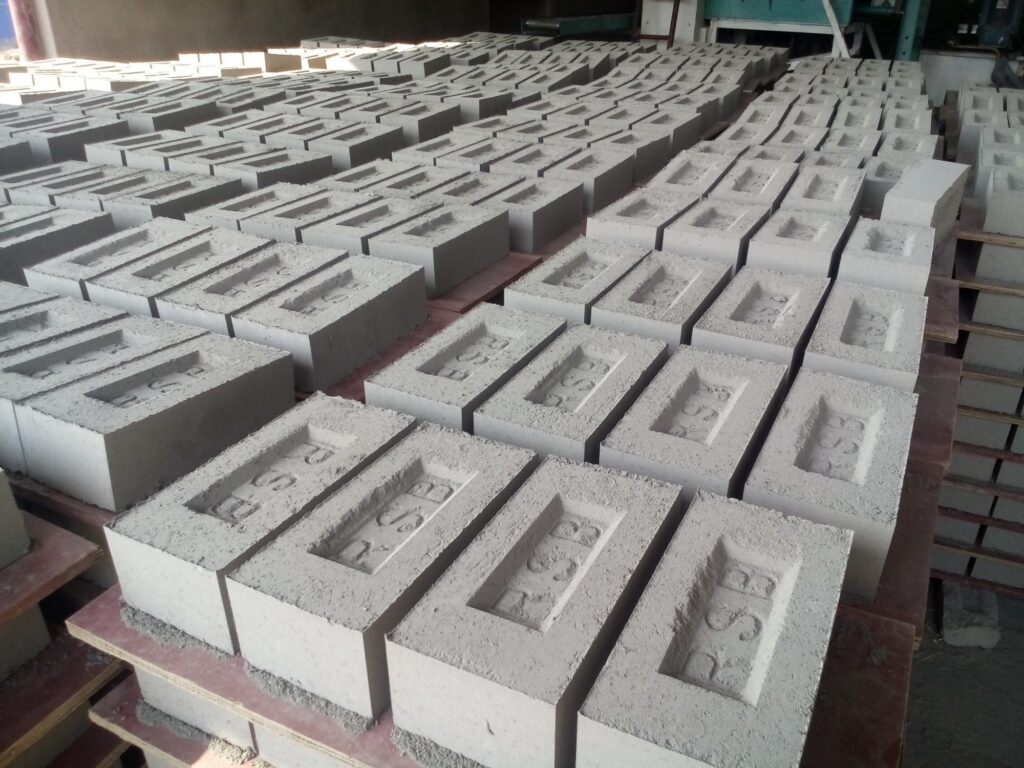
Fly-ash bricks are manufactured using fly ash (a by-product of thermal power plants), lime, gypsum, and sand. Instead of being fired in kilns like traditional clay bricks, they are compressed and cured. This curing process minimizes energy consumption and creates a stronger, more uniform brick.

One of the biggest advantages is their extremely low water absorption rate. While clay bricks absorb fifteen to twenty percent water, fly-ash bricks often absorb less than ten percent. During floods, this difference determines the extent of damage a wall sustains and how quickly it can dry afterward.

Fly-ash bricks are lightweight, dimensionally stable, and require less mortar, which makes construction faster and more cost-efficient in rural and urban settings alike.


2. Why Fly-Ash Bricks Perform Better During Floods

Homes built with clay bricks tend to crack, erode, and retain moisture after a flood. This leads to mold growth, weak walls, and long repair times. Fly-ash bricks respond differently because of their microstructure. Their tightly compacted composition makes them far less porous and far more resistant to erosion or saturation.

When floodwater enters a home, walls built from fly-ash bricks dry faster, maintain structural integrity, and suffer fewer surface failures. This dramatically reduces post-flood repair costs, especially for low-income communities that cannot afford continuous reconstruction.

In addition, the lime in fly-ash bricks chemically reacts during curing to form compounds that improve density and strength, giving them long-term durability even under extreme moisture cycles.


3. Environmental Benefits: Turning Waste Into Resilience

Millions of tons of fly ash are produced every year, much of which ends up in landfills or contaminates soil and water. Transforming this waste into a structural material not only protects the environment but also reduces the pressure on natural soil resources used to make clay bricks.

Producing fly-ash bricks lowers carbon emissions by eliminating the need for fired kilns. It also reduces the demand for topsoil, which is often illegally mined and contributes to ecological degradation. Choosing fly-ash bricks means building flood-resilient homes while contributing to sustainable urban development.

Communities that adopt fly-ash bricks often see both environmental and economic benefits, since local manufacturing creates jobs and keeps material costs low.


4. Cost Advantage: Making Resilient Construction Affordable

Affordability is one of the biggest barriers to flood-resilient housing. Fly-ash bricks are significantly cheaper to manufacture than clay bricks, especially near power plants where fly ash is abundant.

Construction using fly-ash bricks requires less mortar and results in straighter, more uniform walls. For developers and homeowners working with tight budgets, this means reduced labor time, fewer material defects, and lower overall cost of construction.

For rural housing, disaster-relief projects, and low-income communities, these savings make resilient housing accessible without compromising safety or quality.


5. Real-World Case Study: Kerala and Bangladesh Rebuilding With Fly-Ash Bricks

After the devastating 2018 floods in Kerala, India, local engineers began looking for fast, low-cost materials to rebuild damaged homes. Fly-ash bricks quickly emerged as a preferred choice because they resisted moisture better than traditional clay bricks and allowed homeowners to rebuild durable walls without increasing project cost.

In Bangladesh’s flood-prone deltaic regions, NGOs and community projects have adopted fly-ash bricks for small flood-resilient homes. The bricks’ quick curing time and consistent strength make them ideal for rebuilding large numbers of houses after seasonal flooding. Combined with raised plinths or stilt foundations, they provide long-lasting protection for communities that face annual inundation.

These case studies show that fly-ash bricks are not just a material choice. They are part of an integrated resilience strategy for regions where rebuilding every year has become the norm.


6. Challenges and How Engineers Overcome Them

Like any material, fly-ash bricks have limitations. Their performance depends on the quality of fly ash and the precision of the mixing process. Poorly manufactured bricks may crumble or absorb moisture more easily. To address this, engineers emphasize quality control at manufacturing plants and encourage training for local producers.

Another challenge is perception. Many homeowners are not familiar with fly-ash bricks and assume traditional clay bricks are stronger. Overcoming this requires awareness campaigns and on-site demonstrations during community construction programs.

Despite these challenges, the engineering consensus is clear. When manufactured correctly, fly-ash bricks outperform conventional bricks in both durability and flood resilience.


Conclusion: A Small Brick With a Big Impact

In the search for affordable, flood-resilient housing, complex technologies like modular systems, amphibious foundations, and advanced drainage techniques often steal the spotlight. But sometimes, resilience begins with a single building block.

Fly-ash bricks are strong, sustainable, moisture-resistant, and inexpensive. They offer communities a chance to build homes that can withstand rising water levels while reducing environmental harm and construction costs. For engineers designing resilient homes, fly-ash bricks remain one of the most practical materials for the future.