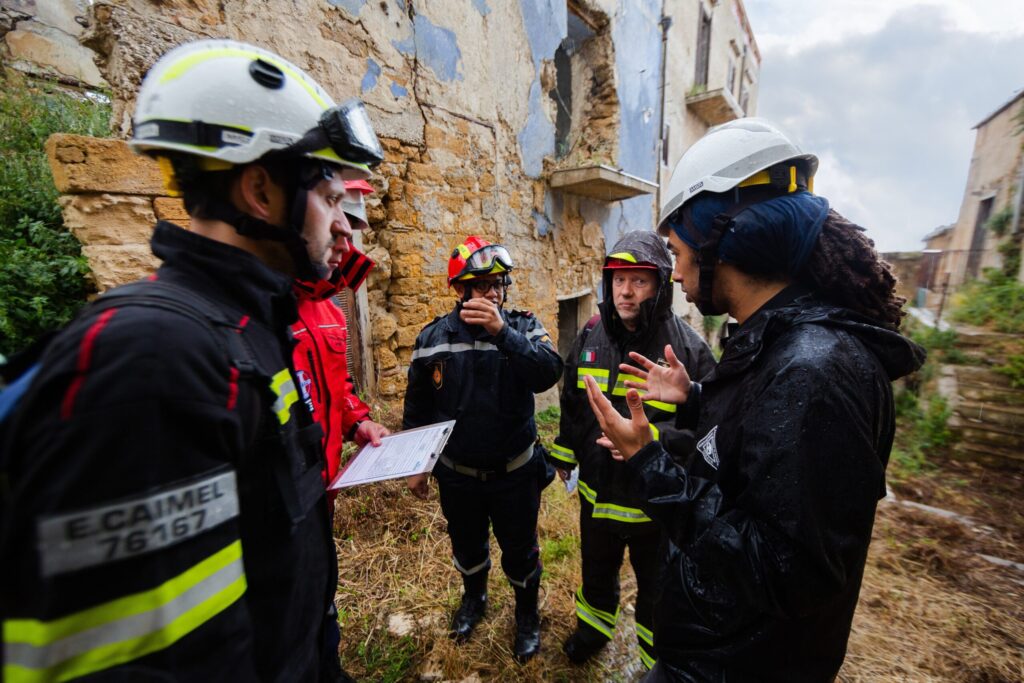
Civil Engineering Students on Real Construction Sites: What New Research Says About Gains, Barriers & Better Visits

Why Construction Site Visits Matter: What New Research Reveals About Real Learning for Civil Engineering Students

Introduction

Civil engineering is a profession built on concrete, steel, soil, and—most importantly—experience. While classrooms teach the theory, it is the construction site that shows students how projects truly come alive. A new 2024 study conducted at one of the largest public universities in the Gulf region provides one of the most detailed analyses to date on what students learn during construction site visits, what obstacles they face, and how universities can make these visits more effective. The research surveyed 53 civil engineering students during the Fall and Spring semesters of 2022–2023, using statistical analysis to measure real gains and challenges. The insights offer a rare, data-backed look into how future engineers understand projects, workers, and the realities of construction.

In simple terms: the study proves that site visits do far more than show buildings; they build engineers.

  1. What the Study Was About

The researchers aimed to understand how construction site visits affect civil engineering students’ learning. They designed a structured questionnaire covering students’ demographics, details about the project visited, the benefits they gained, the barriers they faced, and what improvements they recommended. The study included both male and female students, as well as students with and without previous site-visit experience. Data was analyzed using non-parametric statistical tests such as the Wilcoxon test, Binomial sign test, and Mann-Whitney U test, ensuring reliable insights.

Quick Summary:

  • The study took place at Kuwait University.
  • Sample size was 53 students.
  • Data was collected in Fall 2022–2023 and Spring 2022–2023.
  • Students visited real under-construction projects and submitted detailed reports.
  • Researchers compared results across gender and prior experience.
  1. Who Participated and What Projects They Visited

The demographic analysis shows clear patterns in who joined and what type of projects were most accessible. According to the results:

  • 75.47 percent of all participants were female.
  • 92.45 percent were fourth-year students.
  • 60.38 percent had visited a construction site before.

Projects visited came from a range of categories, but public projects dominated at 68 percent, including educational buildings, housing, infrastructure, commercial, and entertainment projects. Project budgets also varied, with 45.28 percent of site visits taking place at projects valued above 20 million Kuwaiti Dinars.

Quick Summary:

  • Majority of respondents were senior-level students.
  • Most projects were public and large-scale.
  • Students formed their own groups and arranged their own visits.
  1. What Students Actually Learned (Backed by Percentages)

The study identified nine predefined learning gains, and many of these were selected by more than half of all students. The most important findings were:

  • 70 percent said the visit helped them understand how theoretical knowledge fits real-world construction practices.
  • 66 percent said the visit encouraged them to pursue a civil engineering career.
  • Students also learned new terminology, safety procedures, equipment use, and how engineering problems are solved on site.

This confirms what professors often claim: site visits turn abstract concepts from books into working knowledge.

Quick Summary:

  • Understanding theory-to-practice link was the top gain.
  • Career motivation increased significantly.
  • Safety, equipment, and problem-solving knowledge improved.
  1. Barriers That Made Site Visits Difficult

Even though students found the visits valuable, the study uncovered several important obstacles:

  • 40 percent said arranging the visit required too much preparation.
  • 38 percent said visits consumed too much time.
  • 26 percent struggled because a suitable site was not always available.
  • 21 percent said projects were too far from the university.
  • Some students encountered unwelcoming personnel or unfamiliar technical language.

These barriers show that without proper institutional support, even beneficial learning experiences can become stressful or inefficient.

Quick Summary:

  • Logistics and coordination were the biggest problems.
  • Distance and time were major constraints.
  • Students lacked industry contacts, creating difficulties in getting permissions.
  1. What Students Want Universities to Improve

Students made several recommendations to ensure smoother, more meaningful visits:

  • 58 percent wanted the university to organize site visits directly.
  • Some suggested being accompanied by faculty.
  • A few recommended regular, scheduled visits every year.
  • Others proposed limiting the projects to a small curated list, making access easier.

These recommendations show that students want structured support rather than leaving everything to them.

Quick Summary:

  • University facilitation is essential.
  • Faculty involvement improves experience.
  • Scheduled visits reduce stress and increase consistency.
  1. Do Male and Female Students Benefit Differently?

One of the study’s hypotheses was that female students would be more positive about site visits. Surprisingly, the data proved the opposite. The male group recorded:

  • A higher average number of gains (4.615 vs. 3.9)
  • A higher general evaluation score (4.69 vs. 4.025)

Researchers interpret this by noting that male students often gain additional site experience during summer jobs, making them more comfortable with real construction environments.

Quick Summary:

  • Male students showed stronger positive response.
  • Prior experience influences comfort and confidence.
  1. Do First-Time Visitors Learn More Than Experienced Students?

This hypothesis was correct. The study found that:

  • Students with no previous site visit recorded more average gains (4.125) than those who had visited before (3.969).

This demonstrates that the first site visit has the strongest educational impact.

Quick Summary:

  • First-time visitors benefit the most.
  • Repeat visits deepen knowledge but add fewer new insights.
  1. Why Real Site Visits Still Matter in the Age of VR

The research included a large literature review, comparing real visits to virtual reality simulations, 360-degree tours, and interactive mobile platforms. While VR increases engagement, reduces anxiety, and helps during pandemics, multiple studies referenced in the paper show that virtual visits cannot replace real construction field experience.

Quick Summary:

  • VR is helpful but not a substitute.
  • Real sites offer irreplaceable exposure to noise, scale, safety, equipment, and real challenges.
  1. What the Final Results Mean for Civil Engineering Education

The study concludes that site visits are one of the most powerful tools for civil engineering learning. They help students:

  • Understand real project workflow
  • Learn safety culture
  • Interact with professionals
  • Improve terminology
  • Strengthen problem-solving
  • Increase motivation to join the profession

Importantly, 52 out of 53 students said the visit was helpful and cannot be replaced by homework or assignments.

Quick Summary:

  • Site visits are essential, not optional.
  • Students overwhelmingly support them.

References

These insights come directly from the uploaded research paper:

Soliman, E.; Alrasheed, K.; Zayed, T.; Abdelkader, E.M. (2024). Construction Sites Visits for Civil Engineering Students: Gains, Barriers, and Suggestions. Current Trends in Civil & Structural Engineering, 11(2).
Read more…

Construction 4.0: Digital Twins, Autonomous Equipment & the Future Site

Construction 4.0: Digital Twins, Autonomous Equipment & the Future Site

Why the next generation of construction will be smarter, faster, safer, and more precise than ever before.


A New Era at the Jobsite Has Already Begun

For more than a century, construction has been defined by manpower, mechanical tools, and slow, incremental change. But today, something very different is happening. Across the world, excavators are moving without operators, bricklaying robots are stacking walls with millimeter precision, and entire building sites exist digitally before a single foundation is poured. This is not the future. It is happening right now.

This shift is called Construction 4.0, a transformation driven by artificial intelligence, automation, robotics, drones, and digital twin technology. In many ways, it mirrors the Industrial Revolution, but this time the revolution is happening on construction sites. For civil engineers, it represents one of the most significant leaps in productivity and safety in decades.


1. Digital Twins: A Project That Exists Twice

A digital twin is a virtual replica of a structure, site, or entire project. Unlike simple 3D models, digital twins update in real time, integrating data from sensors, drones, and on-site equipment. This gives engineers a living, breathing version of the project that reflects what is happening on the ground.

The true strength of digital twins lies in prediction. Engineers can simulate how beams will behave, how water will drain, how materials will expand, or how an elevated structure will perform during floods. Issues that traditionally appear only when construction starts are now detected months earlier. For resilient housing projects, digital twins allow engineers to simulate floodwaters, material degradation, and the performance of foundations under extreme conditions.

The result is fewer delays, smarter decisions, and massive cost savings.


2. Autonomous Excavators and Earthmoving Equipment

Across the industry, companies are experimenting with fully autonomous excavators, bulldozers, and graders that move, dig, and grade land without operators. In newly reported case studies, AI-enabled excavators can scan soil conditions, detect underground hazards, and adjust digging angles automatically.

This solves several long-standing challenges. It reduces human exposure to risky excavation zones. It increases precision when grading or trenching. And most importantly, it eliminates delays caused by labor shortages, fatigue, or inconsistent workmanship.

Autonomous machines work with the accuracy of a programmed algorithm, twenty-four hours a day, with performance that does not fluctuate. For large infrastructure projects, this can shorten project schedules dramatically.


3. Robotic Bricklayers and On-Site Automation

The idea of a robot laying bricks was once a futuristic scenario. Now, robotic bricklaying systems are being deployed in Europe, the United States, and parts of Asia. These robots use computer vision to detect placement coordinates, maintain perfect alignment, and apply mortar with extreme accuracy.

For civil engineers, automation offers two important advantages. First, it solves the labor shortage in masonry, one of the most physically demanding trades. Second, it ensures uniformity and structural consistency, which are critical for earthquake-resistant and flood-resilient buildings.

The shift toward automated assembly also opens the door for modular construction, where robots build wall panels in factories that are later transported to the site. This dramatically speeds up affordable housing projects.


4. AI-Powered Scheduling and Predictive Planning

Construction delays are often caused by poor coordination between teams, unclear communication, or unforeseen material shortages. AI scheduling systems solve these issues by analyzing thousands of project variables, predicting potential delays, and adjusting schedules instantly.

These systems consider weather forecasts, crew productivity, material deliveries, equipment maintenance schedules, and even traffic conditions. They act like a brain overseeing the entire site, ensuring every task aligns perfectly.

For flood-resilient housing or large infrastructure work, predictive planning can identify high-risk activities during monsoon seasons or periods of heavy groundwater saturation, giving engineers time to plan mitigation strategies.


5. Drone-Based Monitoring and Real-Time Data Collection

Drones are becoming the construction site’s new supervisor. With high-resolution imaging, thermal sensors, and LiDAR scanning, drones collect enormous amounts of data in minutes. Engineers use this information to monitor progress, detect unsafe areas, verify structural alignment, and even map flood-prone zones during rainy seasons.

Drones also protect workers by inspecting hazardous areas such as unstable slopes, deep trenches, or damaged structures after storms.

When combined with digital twins, drone data turns the virtual model into an accurate reflection of the real site.


6. The Future Site: Where Humans and Machines Work Together

Construction 4.0 is not replacing civil engineers. It is empowering them. The future construction site will combine human judgment with machine precision. Engineers will use digital twins to plan, AI to schedule, robots to build, drones to monitor, and sensors to evaluate structural health.

Instead of spending hours on repetitive tasks, engineers will spend more time analyzing, designing, and coordinating. This shift is exactly what the industry needs as it faces rapid urbanization, climate-change pressures, and the need for quicker, more resilient infrastructure.

The next generation of civil engineers will not just build structures. They will design intelligent construction ecosystems.


Conclusion: The Revolution Is Here

Construction 4.0 is no longer a prediction. It is a transformation happening in real time. Digital twins, robotics, autonomous equipment, and AI are not just enhancing productivity. They are redefining what construction can be. For civil engineers, this is an era of massive opportunity. The engineers who embrace these technologies will lead the projects that shape the future of cities, transportation, housing, and climate resilience.

The question is not whether Construction 4.0 will change the industry. It already has. The question is how quickly each engineer, firm, and developer will adapt.

How Drones, AI, and Robotics Are Changing Construction Productivity and Safety

How Drones, AI, and Robotics Are Changing Construction Productivity and Safety

The future jobsite is already here, and it is smarter, safer, and faster than ever before.


Introduction: The Jobsite That Never Sleeps

Ten years ago, a construction site was defined by dust, noise, piles of materials, dozens of workers, and an overseer with a clipboard. Today, something very different is happening. Machines fly above the site, capturing millions of data points in minutes. Robots lay bricks with precision that never slips. Artificial intelligence predicts risks long before a supervisor notices anything unusual. What once looked like science fiction is becoming standard practice in modern construction.

The biggest shift is not just in technology itself but in how it is transforming productivity and safety. Construction has always been one of the slowest industries to adopt innovation, yet it now finds itself at the center of a digital revolution. This revolution is reshaping workflows, improving accuracy, reducing accidents, and creating more resilient, efficient projects. To understand how, we need to look closely at the specific technologies making this change happen.


1. Drones: Eyes in the Sky for Faster and Safer Decisions

Drones have become one of the most powerful tools on a modern jobsite. A single drone flight can capture measurements, progress images, stockpile volumes, and terrain data that once required hours of walking the site. These aerial insights help engineers detect issues early, track the project in real time, and avoid costly delays.

What makes drones particularly valuable for safety is their ability to inspect hard-to-reach areas without risking human lives. Instead of climbing scaffolds or entering unstable zones, engineers can use drones to check alignment, surface cracks, formwork, and roof work with precision. This not only improves speed but also eliminates unnecessary exposure to hazards. In flood-prone regions or sites with uneven ground, drones provide the kind of terrain analysis that traditional surveying simply cannot match at the same speed.

The result is a jobsite where decisions are based on clear data rather than guesswork, and where workers stay out of danger zones whenever possible.


2. Robotics: Precision That Never Gets Tired

Robotics in construction is growing rapidly, especially in tasks that require repetition, accuracy, or heavy labor. Robotic arms can lay bricks at a consistent pace, robotic rebar tiers can prepare reinforcement faster than human labor, and robotic total stations can set out coordinates with advanced accuracy.

The strength of robotics lies in consistency. A robot does not get tired, does not make careless mistakes, and does not suffer from reduced attention during long shifts. For example, a bricklaying robot can place thousands of bricks per day with millimeter accuracy. This speed and precision reduce material waste and prevent structural issues caused by uneven work.

On complex sites, robots can take over dangerous tasks such as demolition, handling heavy loads, or operating in contaminated areas. This shifts humans away from high-risk zones and improves overall site safety. Workers move into roles of supervision and quality control while robots handle the heavy or hazardous tasks.


3. Artificial Intelligence: Predicting Problems Before They Happen

Artificial intelligence is turning construction into a predictive industry rather than a reactive one. AI systems analyze real-time site data, worker movement patterns, weather forecasts, sensor information, and project history to identify risks before they escalate.

Imagine a system that warns the site manager that a certain zone is becoming unsafe due to unbalanced material storage. Or software that predicts which tasks are falling behind and automatically adjusts the schedule to prevent delay. Or cameras that detect workers entering restricted areas and send instant alerts. These capabilities are not futuristic. They are already in use across many large-scale projects.

AI also enhances productivity by optimizing material use, predicting equipment maintenance, and identifying the best sequencing of construction tasks. Instead of relying on manual planning alone, engineers now have digital models that learn continuously from the site’s performance. This leads to fewer surprises, fewer delays, and more efficient execution.


4. Integrating Technology: The Smart Jobsite

The true power of automation is not in drones, robotics, or AI alone, but in how they work together. Drones provide aerial data. Robots perform physical tasks. AI processes information and makes predictions. When connected through digital platforms or digital twins, the jobsite transforms into a seamless, intelligent ecosystem.

For example, a drone may capture a deviation in slab thickness. AI processes that data and alerts the project engineer. A robotic scanner inspects the area more closely. The site manager receives an automated risk report with recommended corrective actions. What once required dozens of people and days of checking can now happen in a single afternoon with higher accuracy.

This is the emerging future of construction: a site where every tool communicates, every process is tracked, and every decision is supported by reliable data.


5. The Human Role: Why People Matter Even More

A common misconception is that automation will replace workers. In reality, construction still depends heavily on human judgment, creativity, and problem-solving. Automation is not a replacement. It is a safety harness for the future of the industry.

Workers become supervisors of robots, analysts of drone data, and operators of AI-powered systems. Productivity rises because humans can focus on high-skill tasks instead of repetitive or hazardous work. Safety improves because risks are predicted earlier, and dangerous work is minimized. And quality increases because digital checks reduce errors.

The future of construction is not automated or human. It is a partnership between both.


Conclusion: A Safer, Smarter, Faster Era Has Already Begun

Automation, robotics, drones, and artificial intelligence are reshaping construction more rapidly than any technology in the past century. They reduce accidents, accelerate timelines, improve accuracy, and allow engineers to manage complexity with confidence. The jobsite of tomorrow will look nothing like the jobsite of yesterday. It will be defined by machines that work tirelessly, data that flows instantly, and humans who make informed decisions with clarity.

Construction is entering an era where safety is designed into every step, and productivity is supported by technology that never sleeps. For engineers, this transformation is not optional. It is the next leap forward.

Plane Surveying: Basics, Techniques, and Real Applications

Plane Surveying: Basics, Techniques, and Real Applications

The essential science behind measuring our world with precision.


Introduction: The Hidden Skill Behind Every Construction Project

Before the first brick is laid, before a foundation is dug, and before a single machine arrives on site, something else must happen. A surveyor must measure the land with such accuracy that even a small error could change the entire project. This process, known as plane surveying, is the quiet backbone of civil engineering. It ensures that buildings stand straight, roads follow the correct alignment, and every structure sits exactly where it should.

People often think surveying is simply about “measuring land.” In reality, it is a mix of science, geometry, precision, and interpretation. Plane surveying might look simple from a distance, but it requires intense focus, mathematical thinking, and the ability to visualise a project long before construction begins. Without accurate surveys, even the best-designed projects can fail.


1. What Is Plane Surveying?

Plane surveying is the method of surveying land while assuming the Earth is flat over a small area. This is done because, for most engineering and architectural projects, the curvature of the Earth is negligible. When the area is small, the difference between “curved Earth measurements” and “flat plane measurements” becomes so tiny that it does not affect accuracy.

This assumption allows engineers to treat the ground as a two-dimensional plane and perform simpler calculations. It forms the foundation for designing buildings, roads, drainage systems, and land divisions. Plane surveying is used on construction sites, in agricultural planning, during property boundary marking, and in many public infrastructure projects.

It is one of the oldest and most important skills in civil engineering, and modern technology has only made it more powerful.


2. Why Plane Surveying Matters

A small error in surveying can magnify dramatically as a project grows. If a boundary line is marked incorrectly by even a few centimeters, a future building may be constructed outside the legal property. If the slope is miscalculated, drainage may fail, causing waterlogging or structural settlement. Engineers depend on accurate plane surveying to prevent future disasters.

Plane surveying ensures that all design elements align with real-world conditions. It verifies levels, determines elevations, guides excavation, and provides reference points for construction crews. It offers a roadmap for the project from start to finish. Good surveying reduces waste, prevents conflict, and saves enormous time and money.


3. Basic Principles of Plane Surveying

Plane surveying follows several core principles that help engineers maintain accuracy. One key principle is working from whole to part. Surveyors establish large, accurate control points first and then subdivide them into smaller networks. This prevents error accumulation and ensures that small mistakes in minor measurements do not affect major areas of the project.

Another principle involves verifying every measurement through repetition. Surveyors often take the same readings multiple times to identify inconsistencies. Angles, distances, and elevations are checked against one another to maintain reliability. This level of precision is what makes plane surveying such a trusted foundation for civil engineering work.


4. Instruments Used in Plane Surveying

Although surveying tools have evolved greatly, the fundamental principles remain the same. Traditional tools like the chain, tape, compass, and level are still used in basic surveying tasks, especially in remote regions or for small projects. These tools teach surveyors the fundamentals of measurement, alignment, and observation.

Modern surveys use far more advanced instruments. The total station, which combines electronic distance measurement with angle calculations, has become the industry standard. Digital levels provide extremely precise height measurements. GPS devices and drones are used for mapping large areas quickly. Despite these advancements, the skills learned through basic plane surveying guide the use of all modern instruments.

Every tool requires careful calibration, a deep understanding of its limitations, and the ability to interpret data accurately.


5. Common Techniques in Plane Surveying

Triangulation

This technique forms a network of triangles over the survey area. By measuring one side and two angles, surveyors can calculate all remaining unknowns. It is one of the oldest and most reliable methods for establishing control points.

Traversing

In traversing, a series of connected lines form the framework for mapping. Surveyors measure distances and angles at each point, creating a path that outlines boundaries, roads, or site perimeters. It is especially useful for construction layouts and property surveys.

Levelling

Levelling determines the relative heights of different points. This ensures proper drainage, foundation depth, and elevation control. Levelling is essential in road construction, pipeline design, and building foundations.

Taping and Offsetting

Used for small-scale work, this technique involves measuring straight distances and creating perpendicular offsets to locate objects. It is ideal for basic site planning and marking trees, fences, and utilities.

These techniques are chosen based on site conditions, project size, and required accuracy.


6. Real-World Applications of Plane Surveying

Plane surveying plays a decisive role in nearly every type of civil engineering project. Consider road construction. Surveyors determine the alignment, measure gradients, set out curves, and guide excavation. Without surveying, roads would be uneven, misaligned, or dangerous.

In building construction, surveyors mark the exact position of columns, walls, and foundations. They ensure that the structural design is reflected accurately on the ground. They verify heights, adjust levels, and help contractors translate plans into physical reality.

Plane surveying also supports environmental work, agriculture, drainage design, flood studies, land development, and municipal planning. Every successful project begins with the confidence that the land has been measured correctly.


Conclusion

Plane surveying may not attract the spotlight, but it forms the backbone of modern engineering. It ensures that structures stand in the right place, roads follow safe routes, and every element of a design fits together with precision. As technology advances, plane surveying becomes even more powerful, but its core principles remain the same. Accurate measurements, thoughtful planning, and reliable techniques will always be essential to building a safer and more organized world.

Understanding plane surveying means understanding the starting point of all civil engineering. Without it, nothing else can begin.

Safety in Construction: How Engineers Keep Workers and Sites Secure

Safety in Construction: How Engineers Keep Workers and Sites Secure

The engineering behind safe work sites is more advanced than most people realize.


Construction safety doesn’t come from helmets and harnesses. It comes from engineering decisions made long before a worker steps on-site.


The Real Foundation of a Safe Construction Site Isn’t Concrete. It’s Engineering.

Most people imagine construction safety as something that happens on the surface, like the gear workers wear or the warning signs placed around the site. But the truth is far deeper. Safety begins during planning, at a time when the building doesn’t even exist. Engineers spend weeks understanding soil behavior, mapping hazards, planning access routes, predicting stresses on temporary structures, and designing a workflow where workers can move confidently without facing avoidable risks. This early-phase engineering is where most accidents are silently prevented without anyone ever realizing something was avoided.

A construction site is not inherently dangerous. It becomes dangerous when risks are underestimated or left unmanaged. Engineers eliminate these risks by turning a chaotic environment into a controlled system where every movement, material, and machine follows a predictable pattern. When the planning is precise, workers experience fewer surprises, and safety becomes something built into the structure, not something added on later.


Engineering Out Hazards Before They Happen

A major part of construction safety lies in predicting how things might fail. Engineers analyze every stage of construction the same way structural engineers analyze how buildings behave after completion. Temporary supports carry enormous loads during construction, soil reacts differently under heavy rainfall, and cranes have specific safe turning zones that must never be crossed. Each of these scenarios can turn dangerous if not carefully studied. Engineers use their understanding of structural mechanics, geotechnical behavior, and material properties to reduce the chances of failure during construction itself.

There is a science to anticipating mistakes, and this science is what keeps workers safe. For example, if soil expands due to moisture, foundations can shift. If concrete is loaded too early, slabs can crack or collapse. If scaffolding is built without confirming bracing stability, it becomes a hazard every time a worker climbs it. This entire layer of safety exists before any worker begins their daily tasks, and it comes from the calculations, modeling, and planning done by engineers who understand what can go wrong long before it does.


Smart Design and Worker-Friendly Planning

Designing safe structures is not only about preventing collapse. It is about designing with workers in mind. Engineers and architects work together to reduce unnecessary height work, create safe access routes, and simplify layouts so workers can perform tasks with fewer risks. When a design requires fewer complex operations, safety automatically increases. For example, grouping services in accessible shafts reduces the need for workers to enter tight, risky spaces. Ensuring beams and slabs are arranged logically minimizes awkward rebar placements, which are common causes of minor site injuries.

Good design makes construction safer not by adding more protective measures but by eliminating the need for dangerous tasks in the first place. When layout, structural components, and temporary works align well, workers move confidently, and supervisors spend less time resolving conflicts on the ground. Safety becomes a natural outcome of smart planning rather than an afterthought.


Safety Systems That Protect Workers in Real Time

Even the best planning cannot remove every risk. This is where physical protection systems come in. Engineers design scaffolding with proper load distribution, specify guardrails where falls may occur, and determine how anchor points for harnesses must be placed. Each of these details comes from precise calculations, load tests, and industry standards designed to make sure equipment performs exactly when workers need it.

Construction relies heavily on temporary structures like formwork, scaffoldings, shoring, and bracing. These elements may not be visible once the building is complete, but they often carry more load during construction than the finished structure ever will. Engineers inspect and approve these temporary systems frequently because the consequences of failure can be catastrophic. A safe temporary system is one of the strongest indicators that a project is being handled responsibly.


Human Factors: The Most Unpredictable Part of Safety

Even with perfect engineering and advanced systems, human behavior remains a major factor in construction safety. Workers come from different skill levels, backgrounds, and training environments. Engineers and safety officers conduct daily briefings, simplify instructions, provide demonstrations of equipment use, and ensure that communication remains consistent across teams. The goal is not to police behavior but to create a culture where workers understand risks clearly and make safe decisions naturally.

One of the biggest challenges in construction is that workers often underestimate risks because they perform similar tasks every day. Good safety engineering addresses this by designing an environment where the safest choice is also the easiest choice. Simple decisions, like placing tools where workers do not have to climb unnecessarily or organizing pathways so materials never block exits, can prevent dozens of accidents over the course of a project.


Inspections, Monitoring, and Predictive Safety

Construction changes daily, and this dynamic nature means risks evolve constantly. Engineers monitor formwork systems during concrete curing, ensure cranes stay within safe operating zones, check weather impacts on the site, and inspect electrical installations for overload risks. They verify scaffolding connections, examine shoring arrangements, and test materials regularly to ensure everything remains stable under real site conditions.

Modern technology has elevated this process further. Drones monitor large sites, offering a bird’s-eye view that reveals unsafe areas that workers may overlook. Sensors inside concrete blocks track temperature and curing quality, ensuring slabs can support loads at the right time. Engineers combine human experience with digital tools to catch potential hazards early, allowing corrections before accidents occur. Safety becomes a continuous process rather than a one-time inspection.


Conclusion: Engineering Makes Construction Safe, Not Luck

Construction is one of the most challenging and dynamic industries in the world. Yet most accidents, big or small, are preventable when engineering principles are followed consistently. Every safe site is the product of thoughtful design, hazard prediction, real-time monitoring, protective systems, and a culture that values workers’ lives above deadlines.

When engineers plan with care, contractors respect the process, and workers stay aware, safety becomes the strongest foundation of any project. The buildings may stand tall, but it is the unseen engineering decisions that truly hold everything together.

Different Fields Involved In Construction

Different Fields Involved in Construction

Understanding the experts behind every building, bridge, and home.


Introduction: The Hidden World Behind a “Simple Building”

When most people look at a finished building, they see walls, windows, paint, and maybe a few workers. What they do not see is the immense coordination happening long before the first brick is laid. Even a small two-bedroom home needs the combined efforts of planners, designers, engineers, surveyors, safety experts, managers, and dozens of specialists who ensure every part of the structure performs exactly as it should.

Construction is not a single profession. It is a network of different fields that must work together with precision. If one field fails, everything else is affected. A structure is only as strong as the teamwork behind it. In this blog, we will explore the main fields involved in construction and understand why each one is essential for creating safe, functional, and long-lasting buildings.


1. Architecture

Architecture is usually the starting point of any construction project. An architect shapes the vision of the structure. They imagine how the building should look, how people will move inside it, and how each space will function. A well-designed architectural plan makes life inside a building smooth, comfortable, and visually appealing.

For example, when designing a home in a flood-prone area, an architect must consider factors like elevated plinth levels, natural ventilation, escape routes, and daylight planning. Architecture is not only an artistic profession. It is the art of designing spaces that make life easier and safer. A beautiful building always begins with thoughtful architectural planning.


2. Civil Engineering

Civil engineers take the architect’s ideas and convert them into structures that can safely exist in the real world. They focus on strength, stability, and long-term durability. Their work includes designing foundations, checking soil conditions, analyzing load paths, planning the drainage system, and ensuring that the building follows safety codes.

A civil engineer asks questions like: Will the soil handle this load. How will the building behave during heavy rain. What happens if an earthquake occurs. Their calculations and decisions protect the building and the people who live in it. Without civil engineering, even the most beautiful design might not survive the forces of nature.


3. Structural Engineering

Structural engineering is a specialized branch of civil engineering. These engineers focus entirely on the strength and stability of the load-bearing elements. They design beams, columns, slabs, retaining structures, and the reinforcement that holds everything together.

Imagine a multi-story building. The structural engineer determines exactly how thick each slab should be, what diameter of steel bars to use, and how much load each column should carry. They consider wind pressure, seismic movement, and even the impact of occupancy. Their work ensures that buildings remain safe not only on normal days but also during extreme conditions.


4. Geotechnical Engineering

The quality and behavior of soil determine the safety of the entire structure. Geotechnical engineers study the earth beneath the building. They perform soil tests, identify its bearing capacity, check groundwater levels, and recommend the right kind of foundation.

A building constructed on weak soil without a geotechnical study is a recipe for future failure. For example, coastal areas often have loose soil that requires special foundation systems. Geotechnical engineers help engineers understand what lies below the surface so the structure above it can remain strong.


5. Construction Management

Construction management is the heart of execution. A construction manager ensures that the project is completed on time, within budget, and with proper quality control. They plan the schedule, coordinate subcontractors, monitor daily progress, and handle on-site challenges.

If materials arrive late, if weather causes delays, or if a safety issue occurs, the construction manager must respond immediately. Their role is dynamic and demanding. A well-managed construction site runs smoothly even when unexpected challenges occur.


6. Quantity Surveying

Quantity surveyors handle the financial side of construction. They prepare cost estimates, break down quantities of materials, create bills of quantities, and track the project budget from beginning to end.

A quantity surveyor helps answer important questions such as how many bricks are needed, how much concrete is required, and whether the project is exceeding its budget. Their calculations help prevent financial losses and keep the project economically healthy. In many real-life projects, a good quantity surveyor can save lakhs by identifying overspending or material wastage early.


7. Surveying

Surveyors measure land accurately and transfer the building coordinates to the field. Using tools like Total Stations and GPS systems, they ensure that the building is constructed exactly where it is planned. Without surveying, buildings might be misaligned, tilted, or built outside property boundaries.

Accurate surveying is especially important for roads, bridges, large housing colonies, and high-rise buildings. A few millimeters of error at the ground level can become a major problem at higher floors. Surveyors ensure accuracy from the very beginning.


8. Mechanical, Electrical and Plumbing Engineering

MEP engineers design the systems that make a building functional and livable. This includes electrical wiring, lighting, power distribution, HVAC systems, water supply, drainage, and fire-fighting systems. A building may have an excellent structure, but without proper MEP design, it will not be comfortable or even safe to use.

For example, improper drainage design can cause foul smell issues, and poor electrical design can lead to overloads or fire hazards. MEP engineering brings modern living comforts into every building.


9. Environmental Engineering

Environmental engineers focus on sustainability and minimizing the environmental impact of construction. They design waste management systems, water treatment solutions, pollution control methods, and eco-friendly strategies for sites.

As cities grow, environmental concerns become more important. These engineers help ensure that construction does not harm local ecosystems. They are also involved in green building certifications and sustainable material selection.


10. Urban Planning

Urban planners look at the bigger picture. Instead of focusing on a single building, they plan entire communities, transportation networks, zoning regulations, and land-use patterns. Their work helps prevent overcrowding, improves mobility, and ensures that developments fit well within the city.

A building may be well designed, but if it does not fit the requirements of the surrounding area, it creates urban problems. Urban planners ensure harmony between structures, people, and the city.


11. Interior Design

Interior designers shape the experience inside a building. They choose materials, lighting, layout, textures, colors, and furniture arrangements that create a comfortable and functional environment. Their work makes spaces feel inviting and efficient.

While architecture shapes the outer shell, interior design influences how people feel inside the building every day. Good interior design improves comfort, mood, and usability.


12. Safety Engineering

Construction is a high-risk industry. Safety engineers identify hazards, create safety procedures, train workers, inspect equipment, and ensure compliance with safety regulations. Their work protects workers from accidents and prevents costly site shutdowns.

Every construction site involves risks such as height, machinery, electricity, and heavy loads. Safety engineering ensures that work continues smoothly and responsibly.


13. Procurement and Supply Chain

Every construction project depends on timely material delivery. Procurement teams source materials, negotiate with suppliers, arrange logistics, and track deliveries. Even a single day of delay in material arrival can slow down the entire project.

They ensure that the construction site never stops due to material shortages and that the materials meet quality standards.


14. Legal and Contract Management

Legal professionals handle approvals, contracts, permits, and dispute resolution. Construction involves many legal steps, including environmental clearance, land approval, inspections, and building code compliance.

Contract managers ensure that agreements between clients, contractors, and suppliers are clear and fair. Their work prevents conflicts and protects everyone involved.


Conclusion

Construction is far more than laying bricks or pouring concrete. It is a complex collaboration of designers, engineers, planners, managers, legal experts, safety professionals, and financial specialists who each bring their own expertise to a project. Understanding these fields helps you appreciate the enormous effort that goes into every structure. When all these disciplines work together, the final result is a strong, safe, and efficient building that serves people for generations.

Affordable Housing Revolution: Can Innovation Lower Construction Costs?

Affordable Housing Revolution: Can Innovation Lower Construction Costs?

The future of low-cost construction will depend on how boldly we embrace new ideas.


Introduction: The Housing Problem No One Is Solving Fast Enough

In almost every major city today, the same pattern repeats. Families are pushed farther away from the places where they work. Young professionals delay marriage or children because rent consumes most of their income. Developers say construction costs are too high. Governments say they cannot speed up approvals. And citizens ask one simple question: Why is a basic roof over the head becoming a luxury?

The uncomfortable truth is that the way we build homes has barely changed in decades. While demand has exploded, construction has remained slow, expensive, and heavily dependent on manual processes. Yet, at the same time, we live in a world where companies are printing homes, building apartments like Lego blocks, modeling entire communities digitally, and creating materials that cost a fraction of traditional bricks.

So the real question is no longer whether innovation can lower construction costs. It is whether the construction industry is ready to rethink everything it knows.

Let’s explore how innovation is rewriting the rules of affordability.


1. Modular and Prefabricated Construction: The New Assembly Line for Homes

Modular construction has quietly become one of the strongest tools in affordable housing. Instead of building every component on site, companies manufacture rooms or entire sections of the building in a factory environment. These sections are later transported and assembled at the site, almost like fitting together large building blocks.

The impact is enormous. Factory production eliminates weather delays, reduces material waste, and allows workers to operate in safer, more controlled environments. A housing project that typically takes eighteen months can be completed in six to ten months. In Singapore, more than half of new public housing incorporates prefabrication, dramatically lowering construction time and cost.

If India or the United States scaled modular construction the way Japan and Singapore did, the housing shortage could shrink significantly. The challenge is convincing traditional developers that predictable factory-built quality is not a compromise but a long-term advantage.


2. 3D Printing: Homes Built in Days, Not Months

Ten years ago, the idea of printing a full-size house felt unrealistic. Today, companies like ICON in the United States and Tvasta in India have successfully printed durable homes in under forty-eight hours. Large robotic arms extrude layers of concrete-like material, forming walls with remarkable speed and precision.

The cost savings come from reduced labor, fewer errors, and the ability to print complex shapes without additional formwork. In Austin, ICON built an entire 3D-printed community for low-income housing, demonstrating the potential for mass adoption. While the technology is still evolving, it is becoming clearer that 3D printing may become the fastest route to truly affordable homes, especially for disaster relief or rural development.


3. New Age Building Materials: Affordable, Local, and Sustainable

Materials account for more than half of a building’s cost. This makes material innovation one of the biggest opportunities for affordability.

Researchers and start-ups are developing alternatives that are cheaper, stronger, and more environmentally friendly. These include stabilized earth blocks, fly ash bricks, bamboo composites, recycled plastic panels, geopolymer concrete, and lightweight foam concrete. Many of these materials can be produced locally, reducing transportation costs and supporting local economies.

A good example is the use of compressed stabilized earth blocks in rural India. These blocks are made from soil mixed with lime or cement, reducing reliance on fired bricks. They are affordable, energy-efficient, and surprisingly durable.

If governments certify and promote these materials more aggressively, material costs for affordable housing could drop significantly.


4. Smarter Architectural Design: Affordability Begins on the Drawing Board

Reducing construction cost does not always require new technology. Sometimes it simply requires design that eliminates unnecessary elements. Smart design focuses on optimizing space, simplifying structural layouts, and using passive elements to reduce long-term energy use.

A project with shared walls, efficient unit stacking, and simple structural geometry reduces concrete and steel requirements. Good design reduces the number of beams, minimizes rework, and ensures natural light and ventilation reduce electricity bills for decades.

Affordable housing is not just about cost reduction. It is about designing with purpose.


5. Digital Construction and BIM: Predicting Problems Before They Happen

Construction is notorious for delays, miscommunication, and costly on-site clashes. Building Information Modeling (BIM) solves these problems by creating a complete digital replica of the building before construction begins.

This digital model shows structural systems, MEP lines, and all components interacting in real time. A clash between a beam and a duct line that would take weeks to identify on site can be detected instantly during design. BIM also improves quantity estimation and scheduling. According to Autodesk, BIM can reduce rework by up to twenty percent, which translates to huge savings in affordable projects.

For affordable housing, where budgets are tight and timelines matter, BIM is not just a tool. It is an essential framework for modern construction.


6. Automation, Drones, and AI: Efficiency That Developers Cannot Ignore

Automation is slowly entering the construction industry. Drones monitor site progress, measure stockpiles, and identify slow-moving areas. AI-based scheduling tools adjust timelines based on weather forecasts and resource availability. Sensors track curing speeds, temperature changes, and material usage.

Even small efficiency improvements accumulate into major savings. A single day saved on a large housing project can save lakhs. When multiplied across hundreds of homes, the impact becomes transformative.

The challenge is adoption. Most construction companies still depend heavily on manual supervision, despite having access to faster, data-driven tools.


7. Policy Support and Public–Private Partnerships: Innovation Needs a Push

Housing innovation becomes powerful when governments support it. Faster approvals, subsidies for low-cost construction materials, tax benefits for affordable projects, and access to public land can make a massive difference.

Countries like Singapore and South Korea have shown how strong policy support can reduce housing costs dramatically. India’s PMAY program also demonstrates how subsidies, combined with modern construction methods, can scale rapidly.

The future of affordable housing is not only about technology but also about collaboration.


8. The Challenges No One Talks About

Every innovation faces barriers. Many developers are hesitant to adopt new methods because they fear regulatory delays or unfamiliar risks. Traditional contractors prefer proven systems, even if they are slower and more expensive. Financing institutions often do not support projects that use unconventional materials or techniques.

Innovation also requires skilled training. A 3D printer cannot run itself. Modular factories need skilled technicians. BIM systems require experienced modelers. Without strengthening the construction workforce, innovation cannot scale.

Understanding these challenges is essential because innovation without adoption is just theory.


Conclusion: The Future of Affordable Housing Depends on Bold Choices

Innovation alone will not solve the housing crisis, but it offers the strongest path forward. Modular construction, 3D printing, BIM, material breakthroughs, and automation can dramatically reduce costs, but only if the industry has the courage to embrace change.

If governments provide support, developers adopt new technologies, and communities are open to new materials and designs, the dream of affordable housing can shift from aspiration to reality. The revolution has already begun. The question now is how quickly we choose to be part of it.